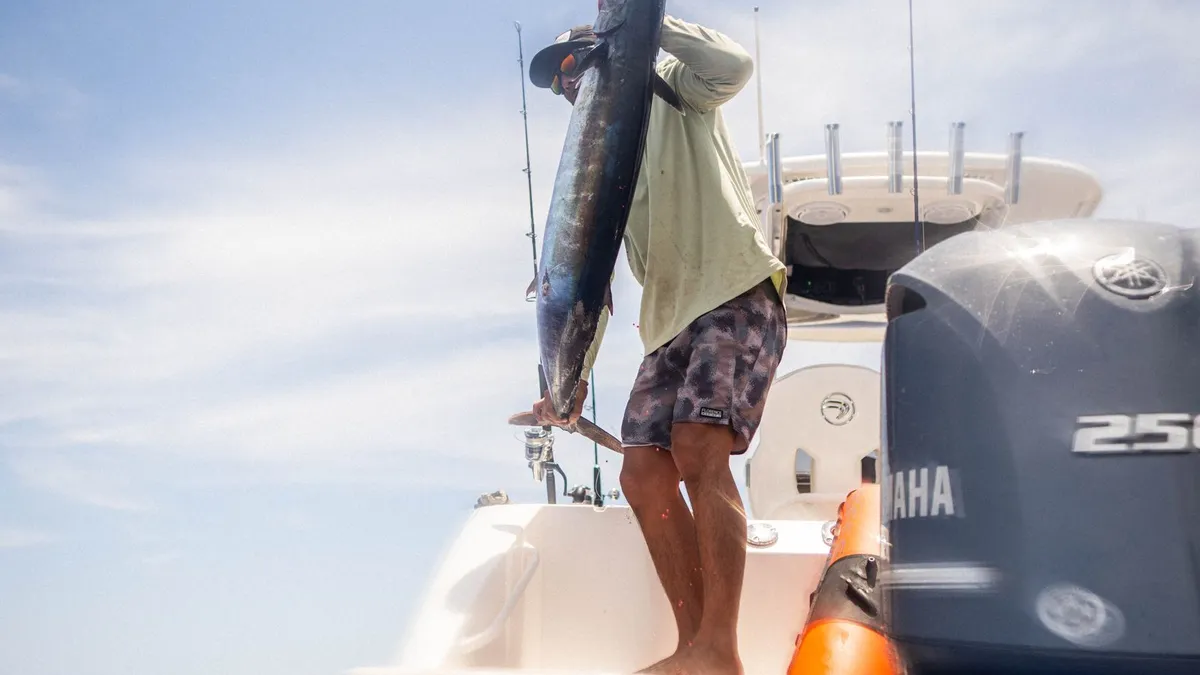
Orange Beach fishing seasons — what's biting, month by month
Orange Beach fishes twelve months a year — but not for the same fish. Home to one of the largest charter fleets on the Gulf and the biggest artificial reef program in the country off its shores, this coast runs on migrations and regulated seasons. The trip of a lifetime in June is a different trip in November. Here's the honest year, season by season.
Spring (March – May): the cobia run, pompano, and the waking-up coast
Spring's headliner is the cobia run — big cobia migrating along the beaches, spotted from tower boats in the clear spring water, roughly March into May. It's sight-fishing, it's a local obsession, and a good cobia is one of the best-eating fish in the Gulf.
Around it, everything else switches on: pompano in the surf (the spring run is its own quiet season, and the Gulf State Park Pier is one of the best places on the coast to fish it), Spanish mackerel around Perdido Pass and along the beaches, sheepshead still thick around bridges, docks, and the pass jetties early in spring, and speckled trout and redfish waking up in Little Lagoon, Perdido Bay, and the bayous. Bottom boats work triggerfish and vermilion snapper over the reef sites. Spring weather can be windy — build a flex day into the trip if a charter is the point of it.
Summer (June – August): Alabama red snapper season
Summer here turns on one fish: red snapper, and Alabama runs its season differently than anywhere else. The state manages its own season for private anglers and state-licensed boats — in 2026 it opened May 22 and ran seven days a week until the state quota (664,552 pounds for 2026) was met — while federally permitted charter boats fish a separate federal season, which in 2026 ran June 1 to October 26. The rules that held in 2026: two fish per person, a 16-inch minimum, and every landed snapper reported through Alabama's Snapper Check program. Those dates and that quota are set fresh every year. If snapper is your fish, check the current year's announcement before you book anything, and know that prime snapper dates with good captains sell out early. Anyone who quotes you fixed snapper dates a year out is guessing.
The rest of the summer board is stacked: king mackerel trolling nearshore, mahi-mahi and the occasional wahoo on longer runs to deeper water, blackfin tuna building toward late summer, tarpon cruising the beaches, and mangrove snapper and grouper on the bottom over the reefs. Inshore, it's trout, redfish, and flounder in the bays, best early and late in the day. Summer is also the busiest season at the marinas — book ahead, take the early trip, and expect the afternoon thunderstorm pattern.
Fall (September – November): bull reds at the pass, and the locals' favorite
Ask the captains their favorite season and most of them quietly say fall. The crowds thin, the water stays warm into October, and two signature fisheries peak. Bull redfish — oversized reds, catch-and-release — stack up around Perdido Pass and on Dixey Bar off Fort Morgan in October and November, and a morning of bull reds is the most fun you can have on light tackle inshore. Flounder make their fall run toward the Gulf, the classic inshore target of the season.
Offshore, fall is blackfin tuna time, vermilion snapper and grouper stay steady on the bottom, and king mackerel hang around into early fall. September can still feel like summer (and it is hurricane season — book with a weather policy you understand), but by October this is the best fishing-per-dollar of the year: summer fish, spring crowds.
Winter (December – February): the quiet season, honestly
Winter doesn't shut this coast down — it just changes the menu and empties the marinas. The winter signature is sheepshead, which pile onto bridges, docks, and pass structure ahead of their late-winter spawn; they're tricky, they're delicious, and they're the fish the year-round locals target. Inshore, speckled trout and redfish stay catchable all winter in the deeper holes of the Intracoastal Canal and the bays, and the surf and the pier give up whiting and pompano on mild days.
Offshore trips run when the weather windows allow, and winter Gulf weather is the honest catch: more blown-out days, colder runs. The trade is real, though — winter is when captains have open calendars, prices are friendliest, and a flexible traveler who can fish the calm day instead of the planned day gets some of the year's most personal trips.
No boat? The Gulf State Park Pier
The Gulf State Park Fishing Pier stretches 1,540 feet into the Gulf — one of the longest fishing piers on the Gulf Coast, rebuilt and reopened after Hurricane Sally destroyed the old one. It fishes the same calendar as the boats in miniature: pompano and Spanish mackerel in spring, king mackerel in summer, sheepshead around the pilings in winter. The pier pass covers your fishing license while you're on the pier, the bait shop is right there, and for a lot of families it's the perfect first "real" fishing day before anyone books a charter.
The fine print that actually matters
Seasons and limits change. Snapper, grouper, and triggerfish seasons are set by state and federal managers and shift year to year; size and bag limits move too. Your captain tracks all of it — it's a big part of what you're hiring — and your license is covered when you fish from a licensed charter vessel. If a specific fish is the point of your trip, say so when you book, and let the captain pick the date with you.
Match the fish to the boat. Cobia and tarpon are sight-fishing from tower boats; snapper and grouper are bottom trips offshore; bull reds and trout are inshore days in the bays and the pass. Our fishing charter guide breaks down the boat types, typical prices, and the local boats we'd put our own family on.
Want a hand timing your trip?
Tell us when you're coming — or the fish you're after — on the charter page, and we'll reply with the captains we'd book for that window and what we'd target if it were our trip. We read every request ourselves. It's free, and it's the whole point of this guide.